How Much Protein Per Day Do You Really Need? By Goal, Body Weight and Age
Quick answer: The minimum to avoid deficiency is 0.8 g of protein per kilogram of body weight per day — about 56 g for a 70 kg adult. That is the floor, not the target. If you are trying to lose weight, build muscle, are physically active, or are over 50, the evidence points to 1.2–2.0 g/kg. For a 70 kg person that is 85–140 g a day, split across three or four meals of 25–40 g each. Most people who "eat plenty of protein" are 30–40 g short when they actually measure.
The numbers by goal
Protein needs are best expressed per kilogram of body weight, because a 55 kg person and a 95 kg person need very different amounts.
| Goal / situation | Target (g per kg body weight) | Example: 60 kg | Example: 80 kg |
|---|---|---|---|
| Minimum (sedentary, avoid deficiency) | 0.8 | 48 g | 64 g |
| General health, lightly active | 1.0–1.2 | 60–72 g | 80–96 g |
| Weight loss (calorie deficit) | 1.2–1.6 | 72–96 g | 96–128 g |
| Weight loss, aggressive deficit or already lean | 1.6–2.2 | 96–132 g | 128–176 g |
| Muscle gain, resistance training | 1.6–2.2 | 96–132 g | 128–176 g |
| Endurance athletes | 1.2–1.6 | 72–96 g | 96–128 g |
| Adults over 50–60 | 1.0–1.2 minimum, 1.2–1.5 if active | 60–90 g | 80–120 g |
| Pregnancy / breastfeeding | ~1.1–1.3 | 66–78 g | 88–104 g |
If you carry significant excess weight, calculate from your goal weight or lean mass rather than current weight, otherwise the number overshoots.
To convert to pounds: divide your weight in lb by 2.2 to get kg, then multiply by the target.
Why the minimum is not the target
The 0.8 g/kg figure comes from nitrogen-balance studies designed to find the amount that prevents deficiency in a sedentary adult. It says nothing about the amount that helps you keep muscle in a deficit, recover from training, or stay full between meals.
Three reasons the practical target is higher:
1. Muscle preservation during weight loss. In a calorie deficit your body breaks down both fat and muscle. Higher protein — 1.6 g/kg and up — consistently reduces the muscle lost, which matters because muscle is what keeps your metabolism up and your body composition improving rather than just your scale weight dropping.
2. Satiety. Protein is the most filling macronutrient per calorie. Meals with 30 g of protein keep people fuller for longer than the same calories from carbs or fat, which is the cheapest way to make a deficit tolerable.
3. Age. After 50, muscle protein synthesis becomes less responsive to the same dose. Older adults need more protein per meal — closer to 35–40 g — to trigger the same effect a 25-year-old gets from 20 g.
Per meal matters as much as per day
Your body cannot bank protein. A day with 5 g at breakfast, 15 g at lunch and 80 g at dinner does not work as well as 30 / 30 / 40, even though the totals match.
Research on muscle protein synthesis points to a sweet spot of roughly 0.3–0.4 g per kg per meal, which for most adults means 25–40 g per meal, three to four times a day. Below ~20 g the stimulus is weak; above ~40–50 g the extra is used for energy rather than building tissue.
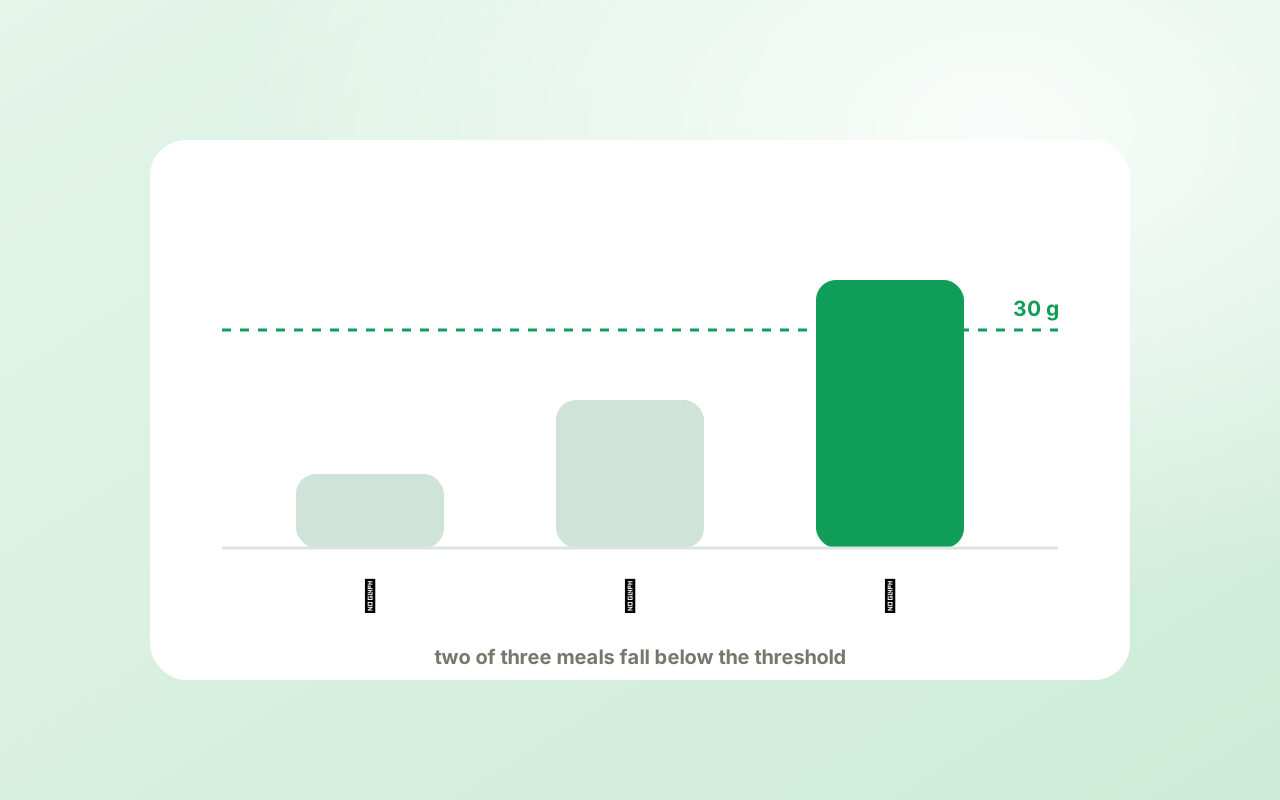
This is where most people lose. A typical pattern:
- Breakfast: toast, cereal, fruit, coffee — 5–10 g protein
- Lunch: sandwich or salad — 15–20 g
- Dinner: meat or fish with sides — 40–50 g
Total: 60–80 g, which sounds fine, but two of the three meals fell below the threshold where protein does its job. Fixing breakfast alone — eggs, Greek yogurt, cottage cheese, a scoop of whey — moves the whole day.
What 30 g of protein looks like
- 120 g cooked chicken breast
- 150 g cooked salmon or white fish
- 4 large eggs (24 g) plus a slice of cheese
- 250 g Greek yogurt (0–2% fat)
- 200 g cottage cheese
- 130 g cooked lean beef
- 1 scoop whey protein (25–30 g) in milk
- 300 g firm tofu
- 200 g cooked lentils plus 100 g quinoa (plant sources need larger portions and combinations)
The 30–40 g gap almost nobody sees
When people start logging protein for the first time, the most common finding is a gap of 30–40 g between what they thought they ate and what they measured. The reasons are consistent:
- "Healthy" breakfasts (oats, smoothies, fruit, granola) are carb-heavy and protein-light.
- Salads and bowls list chicken on the menu but contain 50–60 g of it, not 120.
- Snacks are almost always carbs.
- Plant proteins are counted at their marketing weight ("15 g per serving") without checking the serving size.
This is a tracking problem, not a knowledge problem, and it is why an app that counts protein automatically on every meal changes behaviour faster than a chart. CalMePlease's AI coach flags the gap during the day — "you are at 35 g by lunch, add 30–40 g at dinner" — with specific food suggestions, rather than showing a red bar at midnight.
Can you eat too much protein?
For healthy adults, intakes up to about 2.0–2.2 g/kg are well studied and safe. Above that there is no additional benefit for muscle or weight loss, and the extra calories count like any others. People with kidney disease should follow medical guidance on protein; the old idea that high protein damages healthy kidneys is not supported by evidence.
Two practical caveats: very high protein diets often crowd out fiber and vegetables, and protein does not cancel out a calorie surplus. It helps you lose fat, not ignore the total.
A simple protein plan
- Calculate your target. Body weight in kg × 1.2 (weight loss, moderate) or × 1.6 (weight loss aggressive, or muscle gain). Round to the nearest 10 g.
- Divide by meals. Three meals → ~30–45 g each. Four → ~25–35 g.
- Fix breakfast first. It is the meal most likely to be under 10 g.
- Anchor every meal with a protein source before adding anything else to the plate.
- Log it for two weeks to find your real number. The gap is usually bigger than expected.
- Adjust. If you are hungry between meals, the meal before was probably light on protein.
FAQ
How much protein per day for weight loss? 1.2–1.6 g per kg of body weight, up to 2.2 g/kg if you are already lean or in a large deficit. For a 70 kg person, 85–110 g a day is a good working target.
How much protein per day to build muscle? 1.6–2.2 g per kg, spread across 3–4 meals of 25–40 g each, alongside resistance training. More than 2.2 g/kg has not shown extra benefit.
How much protein per day for a woman? Same per-kilogram targets as men; the absolute grams are lower because average body weight is lower. A 60 kg woman losing weight would aim for roughly 70–95 g a day.
Is 100 g of protein a day enough? For most adults up to about 80 kg who are active or losing weight, yes. For a 95 kg person building muscle, it is on the low side.
Do I need protein powder? No. It is a convenient way to hit 25–30 g in a meal that is otherwise light — breakfast, post-workout — but food works equally well.
How do I know if I am getting enough protein? Track it for two weeks. Signs of falling short: hunger soon after meals, slow recovery from training, losing strength while losing weight. The fix is almost always breakfast and lunch, not dinner.
Related: How much fiber per day and why almost nobody tracks it · Why you crash after lunch
CalMePlease counts protein on every meal from a photo, video, voice note or barcode, and its AI coach tells you where to add it before dinner. Free on the App Store.