Calories in Pasta and Noodles: Spaghetti, Ramen, Udon, Pho, Soba, Instant Noodles
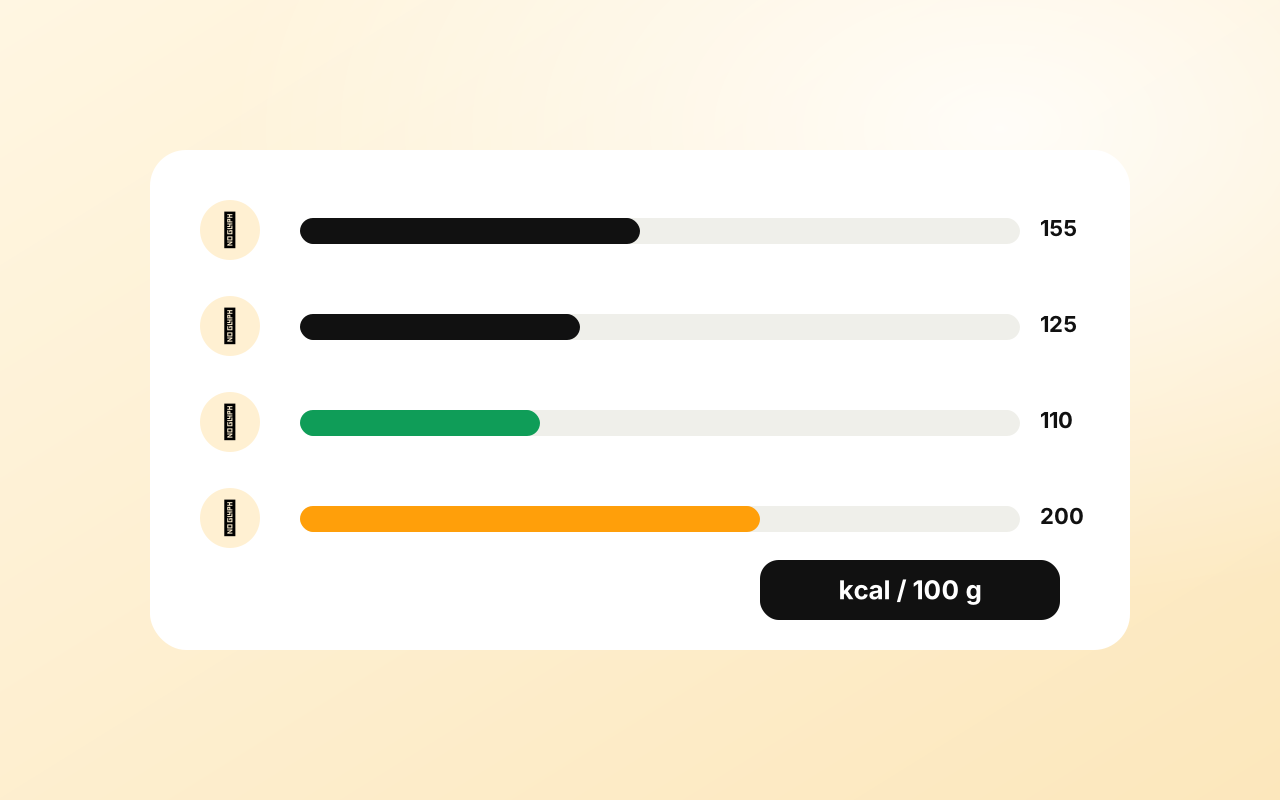
Quick answer: Plain cooked wheat pasta is about 155–160 kcal per 100 g; whole-wheat about 140 with three times the fiber; udon 125; soba 110; rice noodles 110; egg noodles 140. A typical portion of 200 g cooked (about 80 g dry) is 220–320 kcal on its own. What makes a noodle dish 300 or 900 kcal is everything else: oil, cream, cheese, pork broth and the size of the bowl. Like rice, the most common logging error is mixing up dry and cooked weight — pasta roughly doubles, and some noodles triple.
Calories by noodle type, cooked
| Noodle, cooked | Per 100 g | Per 200 g portion | Carbs / 100 g | Protein / 100 g | Fiber / 100 g |
|---|---|---|---|---|---|
| Spaghetti, penne, fusilli (white) | 155–160 kcal | 310–320 kcal | 31 g | 5.5 g | 1.8 g |
| Whole-wheat pasta | 140–145 kcal | 280–290 kcal | 27 g | 6 g | 4.5 g |
| Fresh egg pasta (tagliatelle, ravioli shell) | 140–160 kcal | 280–320 kcal | 27 g | 6.5 g | 1.5 g |
| Gnocchi (potato) | 130–160 kcal | 260–320 kcal | 28 g | 3.5 g | 1.5 g |
| Lentil or chickpea pasta | 150–170 kcal | 300–340 kcal | 24 g | 11–13 g | 5–7 g |
| Egg noodles (chow mein style) | 140 kcal | 280 kcal | 25 g | 5 g | 1.5 g |
| Udon | 125–130 kcal | 250–260 kcal | 26 g | 3 g | 1 g |
| Soba (buckwheat) | 100–115 kcal | 200–230 kcal | 21 g | 5 g | 1.5 g |
| Ramen noodles (fresh, plain) | 140–150 kcal | 280–300 kcal | 27 g | 5 g | 1 g |
| Rice noodles (pho, vermicelli) | 105–110 kcal | 210–220 kcal | 24 g | 1.8 g | 1 g |
| Glass / cellophane noodles | 80–90 kcal | 160–180 kcal | 20 g | 0.2 g | 0.5 g |
| Shirataki (konjac) | 5–10 kcal | 10–20 kcal | 1–3 g | 0 g | 2 g |
| Instant noodles, fried block (cooked, no seasoning) | 190–210 kcal | — | 26 g | 4 g | 1 g |
| Instant noodles, non-fried block | 130–150 kcal | — | 27 g | 4 g | 1 g |
Soba and rice noodles are the lightest common noodles per gram; egg pasta and fried instant blocks the heaviest. Legume pasta is not lower in calories but has double the protein and triple the fiber of white pasta.
Dry vs cooked
| Type | Dry | Cooked (approx.) | Ratio |
|---|---|---|---|
| Wheat pasta | 80 g | 180–200 g | ×2.2–2.5 |
| Whole-wheat pasta | 80 g | 190–210 g | ×2.4–2.6 |
| Rice noodles | 80 g | 200–240 g | ×2.5–3 |
| Soba (dry) | 80 g | 180–200 g | ×2.3 |
| Udon (dry) | 80 g | 220–250 g | ×2.8–3 |
Dry wheat pasta is about 350–360 kcal per 100 g. Log 200 g of cooked pasta against a dry entry and you record 700 kcal for a 310 kcal plate. Log 80 g dry as "80 g cooked" and you record 125 kcal for the same plate. Either mistake is the size of a meal.
Rule: log the state you weighed or saw. Restaurant and photo portions are cooked; packet labels are dry.
The sauce is the dish
A 200 g plate of pasta is 310 kcal. Then:
| Sauce, per serving | Added calories |
|---|---|
| Plain tomato / marinara | +70–100 kcal |
| Tomato with a tablespoon of olive oil | +190–220 kcal |
| Aglio e olio (garlic, 2 tbsp oil) | +240–280 kcal |
| Bolognese (meat, typical portion) | +250–350 kcal |
| Pesto (2 tbsp) | +160–220 kcal |
| Carbonara (egg, pancetta, cheese) | +300–400 kcal |
| Alfredo / cream sauce | +350–450 kcal |
| Mac and cheese sauce | +300–400 kcal |
| Parmesan on top (20 g) | +80 kcal |
| Butter (10 g) | +75 kcal |
A carbonara or alfredo plate lands at 650–800 kcal; a tomato-sauce plate at 400. Same pasta.
Noodle dishes as served
| Dish | Typical serving | Calories | Salt |
|---|---|---|---|
| Spaghetti with tomato sauce | 350 g plate | 400–450 kcal | 1.5 g |
| Spaghetti bolognese | 400 g plate | 600–700 kcal | 2 g |
| Spaghetti carbonara | 350 g plate | 650–800 kcal | 2.5 g |
| Fettuccine alfredo (restaurant) | 450 g plate | 900–1,200 kcal | 3 g |
| Lasagne | 1 portion (350 g) | 550–700 kcal | 2.5 g |
| Ramen, shoyu / shio | 1 bowl | 450–550 kcal | 5–7 g |
| Ramen, tonkotsu | 1 bowl | 600–900 kcal | 6–8 g |
| Udon in broth (kake udon) | 1 bowl | 300–380 kcal | 4–5 g |
| Tempura udon | 1 bowl | 500–650 kcal | 5 g |
| Zaru soba (cold, dipping sauce) | 1 serving | 300–350 kcal | 2–3 g |
| Yakisoba | 1 plate | 500–650 kcal | 3 g |
| Pho (beef) | 1 bowl (600 ml) | 350–450 kcal | 3–5 g |
| Pad thai | 1 plate | 550–800 kcal | 2.5 g |
| Chow mein / fried noodles | 1 plate | 500–700 kcal | 3 g |
| Dan dan noodles | 1 bowl | 550–700 kcal | 3 g |
| Korean instant ramyeon (with seasoning) | 1 pack | 450–550 kcal | 1.8–2.2 g |
| Instant noodle cup | 1 cup | 280–350 kcal | 1.5–2 g |
| Naengmyeon (cold noodles) | 1 bowl | 400–500 kcal | 2 g |
Two things stand out. Broth-based noodle bowls are moderate in calories and very high in salt — a bowl of ramen can be the entire day's 5 g in one sitting, and most of it is in the broth. Cream, oil and stir-fry based dishes are the opposite: modest salt, high calories.
Instant noodles specifically
A standard 85 g pack of fried instant noodles is 380–450 kcal, 14–18 g of fat, and 1.5–2.2 g of salt — most of the salt in the seasoning sachet. Non-fried and air-dried versions are 250–320 kcal. Using half the seasoning cuts salt by roughly 40% with little effect on taste after the first few times; adding an egg and vegetables turns a snack into a meal with actual protein and fiber.
How to log pasta and noodles accurately
Barcode for dry pasta and instant noodles: the label is dry weight. Log the cooked portion against a cooked entry, or weigh dry and divide.
Photo for plates and bowls: the app sees the type and the sauce, but sauce quantity and oil are invisible. Say "carbonara", "with pesto", "tonkotsu" — the name carries the calorie information. For bowls, mention the broth ("finished the broth" vs "left most of it") because that is where the salt is.
Voice: "200 g spaghetti with bolognese", "a bowl of shoyu ramen", "pack of instant noodles with an egg".
CalMePlease logs a noodle dish from a photo or a spoken name, defaults to cooked weight, and returns salt and fiber alongside calories — for noodle bowls, salt is often the number that matters; for pasta, fiber (or its absence) is.
FAQ
How many calories are in 100 g of cooked pasta? About 155–160 kcal for white pasta, 140–145 for whole-wheat. Dry pasta is 350–360 kcal per 100 g — more than double, because the water is not in it yet.
How many calories are in a portion of spaghetti? A plain 200 g cooked portion (80 g dry) is about 310 kcal. With tomato sauce 400–450; with bolognese 600–700; with carbonara 650–800.
How many calories are in ramen? A bowl of shoyu or shio ramen is 450–550 kcal; tonkotsu 600–900. Salt is 5–8 g per bowl, most of it in the broth.
How many calories are in instant noodles? About 380–450 kcal per 85 g pack of fried noodles with seasoning; 250–320 for non-fried versions. Salt is 1.5–2.2 g per pack.
Is whole-wheat pasta lower in calories? Slightly — 140 vs 155 kcal per 100 g cooked. Its real advantage is 4.5 g of fiber per 100 g versus 1.8 g.
Which noodles are lowest in calories? Shirataki (konjac) at 5–10 kcal per 100 g, then glass noodles (80–90), rice noodles and soba (100–115). Among wheat noodles, udon is lightest.
Does pasta make you gain weight? Not more than any other carbohydrate at the same calories. Portion, sauce and oil determine whether a pasta meal is 400 or 900 kcal.
Related: Calories in rice · How much salt per day · Voice food logging
CalMePlease logs pasta and noodle dishes from a photo or a voice note, with salt and fiber per bowl. Free on the App Store.